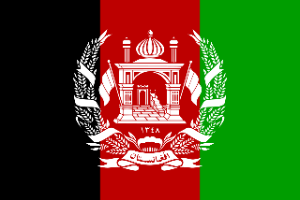

Afghanistan got its own focus tree with "Graveyard of Empires," the same pack that gave Iran and Iraq theirs, and it starts the campaign as the weakest of the three: 2 military factories, 2 civilian factories, not a single dockyard, and only 16 building slots in the whole country. No navy, no air force, and an army of 10 divisions, mostly infantry plus one cavalry division. What you do have is an unbeatable position on the Great Game board, wedged between the British Raj and the USSR, and a focus tree with some of the most outlandish and entertaining routes in the game if you know where to look.
Historical Context
Afghanistan spent much of the 19th century and the early 20th as the playing field of the "Great Game" between the British Empire and Tsarist Russia, a position it consolidated after the Third Anglo-Afghan War of 1919 and the Treaty of Rawalpindi, which restored its control over its own foreign policy; King Amanullah Khan used that independence to launch an ambitious Western-style modernization drive that cost him the throne in 1929, when a rebellion led by Habibullah Kalakani forced his abdication; General Nadir Shah crushed that rebellion, proclaimed himself king, and reversed most of Amanullah's reforms, until he was assassinated in 1933 by a Hazara student and was succeeded by his 19-year-old son, Mohammed Zahir Shah, who would reign for four decades and keep the country neutral throughout the real Second World War.
National Spirits at Start
With "Graveyard of Empires" enabled, Afghanistan starts with five national spirits that sum up a traditionalist, tribal country running on an almost subsistence-level economy:

King Zahir Shah
+10% stability.

Pashtunwali
-40% political power gain. -20% army, navy, and air experience. +20% stability. +0.10 daily non-aligned support.

Turkish Military Mission
+5% division speed. +10% army experience. +5% attack and defense.

Subsistence Economy
+20% stability. -35% production efficiency cap. -50% production efficiency growth. -50% factory output.

Quami
+2% army experience. +3% division defense on core territory. +5% defense, speed, and organization for irregular infantry.
The Starting Point: Almost Nothing to Work With
2 military factories, 2 civilian factories, 0 dockyards, and only 16 building slots in the entire country: no other nation covered on this site starts with less industry. On top of that come nearly non-existent resources — no oil, aluminum, or rubber, and just a handful of tungsten, steel, and chromium — and an army of 10 divisions without a single navy or air unit. The military-industrial organizations guide explains why, with these numbers, one industry focus is worth more than ten military ones.
The Focus Tree Branches
The Afghan tree is organized into 5 main branches with 11 sub-branches, plus a joint branch with  Iran, Iraq, and
  Turkey:
 Expand the Telegraph Network — the industry root focus, which also opens the door to the "Socialist Coup": a communist path that installs a pro-Soviet government, gains Central Asian territory from
  the USSR, and expands into Iran.
 Expand the King's Power-base — the historical/non-aligned road: modernizes the country along Western lines and can end in a republic, including the option to proclaim "Pashtunistan."
 Declare a Republic — the democratic fork branching off the King Zahir path once you've consolidated enough power over the tribal notables.
 Against Kabul — the alternative monarchist branch: instead of strengthening Zahir Shah, plot to replace him with another figure from Afghanistan's past or present.
 Contact Amanullah Loyalists — the alternative fascist path: restores the old reformist king Amanullah Khan and launches the most aggressive expansion in the tree toward
  India, the USSR, Iran, Iraq, Palestine, and Saudi Arabia.
 Pashtunistan Ascendancy — crowns the Faqir of Ipi as the "Golden Emir" and forms the Emirate of Pashtunistan, one of the most outlandish payoffs of "Against Kabul."
 Proclaim the Second Afghan Empire — crowns the Emir of Bukhara or invites the Mughal prince, and expands into the USSR in an attempt to restore the old Timurid Empire.
 Maintain Quami — the traditionalist military branch: cavalry, irregular troops, and captured enemy equipment.
 Adopt Nufus — the modern military alternative: conventional infantry and armor, with planes purchased from foreign powers.
 The Saadabad Pact — the joint branch with Iran, Iraq, and Turkey, recreating the real 1937 non-aggression pact with shared industry and army bonuses.
The military tree also has a branch shared between Quami and Nufus for setting up an intelligence agency and mountain battalions, plus a foreign policy branch that decides who you align with: the Allies, the Axis, or your own agenda.
The Paths: Which Afghanistan Are You Building
No small nation on this site has a range of endings as varied as Afghanistan's:
- Communist (Socialist Coup) — a pro-Soviet government, territory taken from the USSR in Central Asia, and expansion into Iran.
- Historical/non-aligned (King Zahir) — gradual Western-style modernization, with the option to turn toward a republic or toward diplomatically claiming "Pashtunistan."
- Fascist (Amanullah loyalists) — restoring the old reformist king and the tree's most aggressive expansion campaign, capable of reaching all the way to Palestine and Saudi Arabia.
- Alternative monarchist (Against Kabul) — the tree's most eccentric road: crown the Faqir of Ipi and form the Emirate of Pashtunistan, or crown the Emir of Bukhara or the Mughal prince and proclaim the Second Afghan Empire in search of the old Timurid legacy.
With only 2 starting military factories, the path you pick matters less than how fast you can bring in additional industry — almost every expansion route forces you to fight neighbors who start off better armed than you.
The Great Game: Surviving Between Two Powers
Unlike other small nations covered in this guide, real history never sent an invasion Afghanistan's way: it stayed neutral throughout the Second World War, and HOI4 recreates that awkward position with a dedicated foreign policy branch:
- Align with the Allies — join Operation Countenance alongside
 the United Kingdom and the USSR, expand into Iran and the territory of the future "Khorasan," and claim land from Pakistan.
 - Pursue your own agenda — the central path: confederate with Pakistan or, if you'd rather, conquer it outright without picking a side in the world war.
- Seek alternative partnerships — lean toward the Axis in exchange for German and Italian military bonuses, a path that culminates in the "Kabul Conference."
The real danger isn't a foreign invasion, it's internal collapse: if you let instability grow without managing Pashtunwali or without consolidating your own faction within the tree, you risk a repeat of the 1929 Khost rebellion that cost Amanullah Khan his throne. The national statistics guide explains how to avoid it.
Common Mistakes
- Jumping into any conventional war too early — with 2 military factories and no navy or air force, you can't afford a war you haven't spent several years of the campaign preparing for.
- Ignoring the economic branch to rush the military one — while "Subsistence Economy" is active, every extra factory produces half of what it should.
- Committing to "Against Kabul" without knowing what it means — it's mutually exclusive with the King Zahir path, so check the Emirate of Pashtunistan and Second Afghan Empire routes first before deciding to give up the historical road.
Afghanistan's Achievements
Four achievements specific to Afghanistan, nearly all tied to the tree's most ambitious expansion routes:

Graveyard of Empires
As Afghanistan, Iran, Iraq, or the Raj, control all of the other three nations' starting provinces.

I have the high ground
As Afghanistan, control all Himalayan states.

Savior of the holy lands
As Afghanistan, become the owner of Palestine and Mecca.

This achievement is dedicated to the brave soldiers of...
As Afghanistan, capitulate the Soviet Union — the "Graveyard of Empires" with the real history's roles reversed.