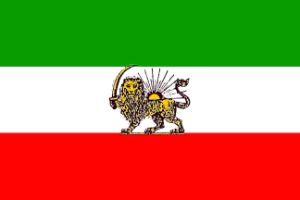
Iran got its own focus tree with "Graveyard of Empires," and it has a very specific problem: it sits on one of the biggest oil reserves in the game — 66 units per hour, almost two-thirds of which are already earmarked for export through the Anglo-Iranian Oil Company — and it's caught right between the two powers that need it most,  the United Kingdom and
  the USSR. This guide covers all four branches of the tree and the Anglo-Soviet invasion real history has waiting for you in 1941.
Historical Context
During World War I, Iran was invaded by Russia and Britain on one side and by the Ottomans backed by Germany on the other, despite having declared itself neutral. After the October Revolution, the USSR tried to set up a puppet government in the north of the country, until a British-backed coup in 1921 brought Reza Khan to power and eventually established the Pahlavi dynasty in 1925. The campaign starts with Iran officially neutral but with Axis sympathies — largely due to German technicians and business interests in the country — something London and Moscow aren't willing to tolerate once war breaks out between Germany and the USSR: in August 1941 both powers jointly invade Iran to secure the Soviet supply route, forcing Reza Shah to abdicate in favor of his son Mohammad Reza Pahlavi.
National Spirits at Start
With "Graveyard of Empires" enabled, Iran starts with five national spirits that paint the picture of a resource-rich country caught between foreign powers and internal tensions:

Anglo-Iranian Oil Company
-15% resource gain efficiency. -10% factory output. +20% resources to market.

Rural Feudalism
+5% political power gain. -5% recruitable population. -2% construction speed. -5% research speed.

Islamic Traditions
+10% stability. -10% research speed. +25% political advisor cost.

Azerbaijani Resistance
-10% stability. -10% war support.

Kurdish Resistance
-10% stability. -10% war support.
The Starting Point: Lots of Oil, Little Industry
3 military factories, 0 dockyards, and only 4 civilian factories: Iran has nothing to turn its oil into military power with on its own in 1936. The resource trade guide explains why this makes Iran a constant target for the great powers — controlling its oil fields is worth more, in the short term, than conquering its whole territory.
The Focus Tree Branches
The Iranian tree is organized into 7 main branches, 17 sub-branches, and one joint branch with Afghanistan, Iraq, and Turkey:
 Establish a National Front — the root focus of opposition to the Shah, which opens up the communist and democratic paths.
 Strengthen the Tudeh Party — the communist road: civil war, possible alliance with the USSR, and spreading communism across the region.
 Rally Behind Mosaddegh — the democratic road: constitutional monarchy or republic, with room for the clergy to seize power and proclaim the Islamic Republic of Iran.
 Proclaim Greater Iran — the fascist road's payoff: after a civil war that installs a new Shah, lets you ally with Germany or Japan — or go it alone — to annex your neighbors.
 The Fight for Iran — only activates if you're in a defensive war; military bonuses and, depending on how attrition goes, the option to force a white peace or end up a puppet.
 The Pahlavi Imperium — the monarchist/historical road: strengthens the ruling dynasty and forks between keeping Reza Shah (First Iranian Empire) or letting his son Mohammad Reza succeed him (Third Persian Empire).
 Imperial Expansionism — recreates the conquests of the Achaemenid Empire: Xerxes' route toward Turkey and Greece, Darius' route toward India through Afghanistan and the British Raj, or Cambyses' route toward Egypt through Iraq.
 Modernizing Iran — the industry branch: research, the railway network, infrastructure, and oil-linked civilian factories.
 The Saadabad Pact — the joint branch with Turkey, Iraq, and Afghanistan, recreating the real 1937 non-aggression pact with shared industry and army bonuses.
On top of that there are three independent rearmament branches: Restructure the Army (with the special operations and intelligence sub-branch), Establish the Air Force, and Establish the Navy.
The Paths: Which Iran Are You Building
After the National Front, the tree opens into very different directions:
- Communist (Tudeh Party) — civil war, possible Soviet support, and spreading communism across the region.
- Democratic (Mosaddegh) — constitutional monarchy or republic, with room to go all the way to an Islamic Republic if the clergy seizes power.
- Fascist (Greater Iran) — a new Shah after a civil war, alliance with the Axis, and territorial expansion that on its most extreme routes even sets up a war against Germany itself.
- Monarchist (Pahlavi Imperium) — the reinforced historical road: strengthens the Pahlavis and opens the door to reviving the Achaemenid conquests via "Imperial Expansionism."
All four paths share the same underlying problem: while you decide which to follow, London and Moscow keep eyeing your oil, and none of the four automatically spares you from the Anglo-Soviet invasion if you don't see it coming in time.
The 1941 Anglo-Soviet Invasion
If you're playing the historical path, here's what to keep in mind rather than an exact date to memorize:
- Before the invasion — prioritize "Modernizing Iran" and rearmament: with only 3 starting military factories, every point of industry you squeeze out of your oil before 1941 buys time for the rest of your tree.
- The trigger — the United Kingdom (Secure Iran) or the USSR (Preemptive Invasion of Iran) can kick off the "Operation Countenance" event chain; the more Axis sympathy you've shown, the sooner it arrives.
- If you refuse the pressure — the joint invasion begins; without at least a minimally prepared navy and air force, you won't be able to stop the landings through the Persian Gulf or the Soviet advance from the north.
- If you end up occupied — "The Fight for Iran" branch decides your fate: swear loyalty to the occupier and milk it for bonuses, or secretly plot for independence with "Rebuilding Iran."
- If you become a British puppet — you can choose to reinstate the Qajar dynasty on the throne instead of sticking with the Pahlavis, a purely political twist with no fighting involved.
The diplomacy and factions guide covers how these great-power pressure event chains work in more detail.
Common Mistakes
- Showing too much Axis sympathy while unprepared — this speeds up the Anglo-Soviet invasion before you have an army or air force to respond with.
- Ignoring the Azerbaijani and Kurdish resistance spirits until they degrade stability enough to risk an internal coup.
- Jumping into "Imperial Expansionism" without spare military factories — all three Achaemenid routes demand simultaneous or back-to-back wars against well-armed neighbors.
Iran's Achievements
Five achievements specific to Iran, most tied to the tree's most ambitious routes:

From Tehran with Love
As Iran, guarantee Poland's independence and ensure it does not capitulate by 1945.

Graveyard of Empires
As Afghanistan, Iran, Iraq, or the Raj, control all of the other three nations' starting provinces.

Pesky Greeks
As Iran, become the owner of all Greek core states.

The Legacy of Cyrus the Great
As Iran, become the owner of the former Achaemenid Empire's states.

The Sands of Time
As Iran, own the entire Middle East.