
Siam reaches 1936 as the only country in Southeast Asia no European power ever colonized — but that doesn't make it strong: barely one military factory to start, an absolute monarchy overthrown just four years earlier, and a civil-military government so unstable that one minor scandal could topple it. Surrounded by French Indochina to the east and British Burma and Malaya to the west and south, Siam is the last free piece on a board two colonial empires have spent decades carving up.
Historical Background
Until 1932, Siam was an absolute monarchy, until a coup by the Khana Ratsadon (the "People's Party") forced the monarch to accept a constitution and hand power to a civilian government; two attempts to restore royal power in 1933 failed, and the king himself ended up abdicating and going into exile in 1935. The game starts in 1936 with a fragile balance between the civilian and military wings of the Khana Ratsadon, where all it takes is one scandal to bring the government down.
What You Need: Thunder at Our Gates
Without the Thunder at Our Gates DLC, Siam uses the generic focus tree shared by any minor nation without dedicated content: Army Effort, Aviation Effort, Naval Effort, Industrial Effort, and Political Effort — five branches identical to dozens of other countries. With the DLC enabled, Siam gets a unique tree centered on the political instability of 1932-1938 and irredentism against its colonial neighbors. This guide focuses on that unique tree.
Starting National Spirit
Siam starts with a single spirit, which sums up how much the army weighs on the country's politics:

Army of Siam
-10% supply consumption, +15% supply range, +10% military factory construction speed — the army as the backbone of national defense.
Notable Focuses You'll Find
Siam's unique tree is very recent content, and there still isn't much detailed documentation of its exact bonuses — but the focus names already tell the story clearly:
 Khana Ratsadon — the root focus: the civil-military coalition that overthrew the absolute monarchy in 1932 and holds up the starting government.
 The Songsuradet Rebellion — a direct reference to the real 1935 attempted royalist coup led by Prince Songsuradet Bidyalongkorn.
 The Regency of Rangsit — one monarchist restoration path, with Prince Rangsit acting as regent while young Ananda Mahidol is still a minor.
 Phibun's Premiership — the historical path: Plaek Phibunsongkhram replaces Phahon as prime minister and pushes the country toward fascism.
 Pan-Thaiism — the pan-Thai nationalism Phibun pushed in real life, laying claim to Thai-speaking peoples left outside the borders.
 Recover Indochina — irredentism against French Indochina, bordering to the east.
 Retake Lost British States — the same impulse, this time against British Burma and Malaya.
 Royal Thai Navy and
  Army of Siam — the land and naval rearmament branches.
 A Modern Economy — the industrial branch, essential when you start with just one military factory.
Starting Path: Japan, Germany, or Holding Out
With a small army, a modest navy, and an air force running a deficit, Siam can't stand up to its colonial neighbors alone — it needs to mobilize first, and it almost always needs a sponsor afterward. The historical path is to swing fascist and, patiently, join  Germany's or
  Japan's faction. The communist path is rarer, but it exists, if you'd rather lean on
  the USSR or help
 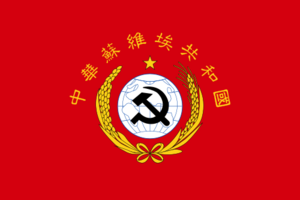 communist China resist the Japanese invasion. Staying democratic or non-aligned gives you a calmer playthrough, but it doesn't hold up well through an active war campaign.
Whichever path you take, the priority is almost always the same: occupy the rest of Indochina the moment the opportunity appears.
- Joining Japan — if Japan follows the historical path and goes to war with
 France because it refuses to hand over Indochina, you can join in to help occupy it, and with enough war participation you can even request control of the occupied territories.
 - Joining Germany — if you're already fascist, join the Axis as soon as you can: war with France is nearly inevitable, so it's worth having troops already positioned on the border to grab territory before Vichy France forms.
- Waiting for Vichy France — if you'd rather stay neutral longer by rejecting both Japan and Germany, once France capitulates and Vichy France is born (which usually takes a while to join the Axis), its Indochina is left open for you or Japan to occupy, whoever gets there first.
Forming Greater Thailand
With Thunder at Our Gates, Siam's formable is called Greater Thailand (in the generic tree without the DLC, the equivalent variant is called the Rattanakosin Empire, and requires controlling Laos and Cambodia). The faster you reclaim territory lost to France and  the UK, the sooner you can complete it — which is also the basis for the country's most demanding achievement.
Common Mistakes
- Playing without Thunder at Our Gates expecting the tree described here — without the DLC, Siam is stuck with the generic tree shared by any minor nation.
- Staying neutral too long and missing the window to occupy Indochina before Japan or Vichy France gets there first.
- Neglecting your own industry — with only 1 military factory and 5 civilian factories to start, any delay in mobilizing costs you quickly.
- Committing to fascism without a faction plan — decide early whether you're joining Japan or Germany; going it alone against two colonial empires isn't a realistic option.
Siam's Achievements
Only three achievements, but demanding ones:

Hail to the King
As Siam, form Greater Thailand before King Ananda turns 15.

Thai fighters
As Siam, get 10 air aces.

Grand Siam
As Siam, capitulate 4 nations within one year.