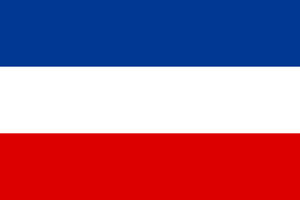
Yugoslavia doesn't fall for lack of an army, it falls from the inside. King Peter II is still underage, so the country is run by a regency, Prince Paul, without the legitimacy or the steady hand of the monarch who was assassinated in 1934. Croats, Slovenes, and Macedonians have spent years pushing back against a state centralized in Belgrade, and that internal fracture — not the Wehrmacht — is the first thing you need to fix, because 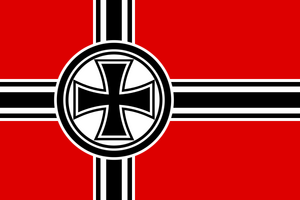 Germany knows it perfectly well and knows exactly how to exploit it.
Historical Context
The Kingdom of Serbs, Croats and Slovenes was born in 1918 as a hurried union of peoples with very different languages, religions, and histories, renamed Yugoslavia in 1929 under a royal dictatorship that tried to curb tensions between communities until King Alexander I's assassination in 1934. The game starts in 1936 with Prince Paul serving as regent on behalf of young Peter II, trying to keep the balance between the kingdom's communities while Germany and 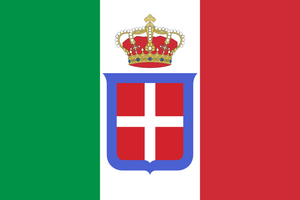 Italy apply increasing pressure from outside.
A Country of Five Fractures
Yugoslavia starts with five national spirits, and unlike most nations, almost all of them represent a problem to solve rather than an advantage to build from. It's the game's way of telling you, from day one, where the real front line actually is:

Croatian Opposition
-30% stability while Croatia has no political satisfaction within the kingdom — the heaviest of the five.

Macedonian Opposition
+25% cost to change conscription, trade, and economy laws, and +25% political advisor cost.

Slovene Nationalism
-10% production efficiency growth, a quiet but constant drag on the entire war economy.

Serbian General Staff
+50% military leader cost and +10% max planning — the only one of the five with a clearly positive side.

Anti-German Military
+5% ideology drift defense, reflecting the Yugoslav army's instinctive rejection of fascism.
The first three — Croatian, Macedonian, Slovene — are the ones that really shape the game: as long as they stay active, any military plan is built on an unstable political foundation. The focus tree exists, in large part, to dismantle them one by one.
Modest Industry, Large Population
With 15 civilian factories, 3 military factories, and a single dockyard, Yugoslavia is not an industrial power — well behind Italy or even  Poland — but its 13.78 million people give it a manpower pool that's nothing to scoff at for the region. The opening strategy almost always involves converting that population into an army and that modest industry into just enough infrastructure to sustain it, knowing that neither Germany nor Italy will give much time to prepare.
The Focus Tree Branches
Yugoslavia's tree is called Powerhouse of the Balkans and is organized around several main branches:
- Internal Unity — the historical branch and the mandatory starting point: reduces the three internal oppositions (Croatian, Macedonian, Slovene) and reworks the relationship between Belgrade and the regions.
- Military Reform — modernizes an army still anchored in First World War doctrine.
- Foreign Policy — decides the kingdom's diplomatic orientation toward the Axis, the Allies, or an independent path.
- Road to Titoism and March to War — alternate-history branches that let you install a communist or fascist government respectively. This guide doesn't cover them in detail: they're playthrough paths that will be covered in separate content later.
The Banovina of Croatia: Concede to Cohere
Inside the Internal Unity branch sits the historical decision that really defines the opening game: granting the  Banovina of Croatia, the same autonomy the Cvetković-Maček Agreement created in real life in 1939. In game terms, this focus directly reduces Croatian opposition in exchange for ceding political authority over the region — an almost always profitable trade, since a satisfied Croatia stops bleeding stability every turn while the rest of the tree stays open.
The alternative is centralization: keep Belgrade's authority intact and accept that Croatian opposition stays active longer, betting on resolving it by force or through other political means down the line. It's a slower, riskier route, because every turn with the opposition active is a turn of lost stability that doesn't come back. The  Pan-Slavic Congress, later in the tree, points in the opposite direction: a shared Yugoslav identity above regional identities, the long-term project that the Banovina only starts to make possible.
For a first playthrough, the recommendation is clear: grant the Banovina as early as possible. The political cost is real, but the alternative — entering the war with Croatian opposition still active — usually costs a lot more.
When the Conventional Front Collapses
The mountainous terrain of the Balkans is Yugoslavia's defensive asset for when — not if — the Axis invasion comes, the same way it is for  Finland against the
  USSR: it won't let you win a conventional war against Germany and Italy combined, but it can make it very expensive. The most common mistake is focusing purely on the regular army and having no plan for when the front line collapses; Yugoslavia's own history — the partisan resistance that followed the 1941 defeat — points clearly to guerrilla warfare as a viable exit once the conventional war is lost. This guide will expand with a breakdown of that resistance phase. See also the diplomacy and factions guide to better understand the pressure you'll face from the Axis from the start, and the doctrines guide to orient your army toward difficult terrain rather than classic mobile warfare.
Yugoslavia's Achievements
Five achievements specific to Yugoslavia, almost all tied to the kingdom's internal fragmentation or to Balkan politics:

Dracula's Revenge
As Yugoslavia, establish the autonomous region of Transylvania and have it own all Romanian cores.

Huge-oslavia
Occupy all your neighbouring countries: Austria, Hungary, Romania, Bulgaria, Albania, Italy, and Greece.

Now This is Getting Childish
As Yugoslavia or Bulgaria, be at war while both countries are ruled by a child.

Peter's Pride
As Peter II of Yugoslavia, overthrow your uncle and become King.

The Balkan Powder Keg
Start the Second World War: be part of either the Axis or the Allies and at war with the other faction in a war you started.