
Poland starts with the worst clock in the game: 26 factories total — less industry than almost any other playable power, and not a single dockyard — and a date, September 1939, that arrives before any rearmament plan can make up the difference. This guide doesn't promise to win the war against Germany — it promises to make it much more expensive than it was in real history.
Historical Context
Poland was reborn at the end of the First World War after more than a century partitioned between Russia, Prussia, and Austria, and has lived under the Sanation regime established by Marshal Piłsudski since 1926. The game starts in 1936 with Poland caught between an increasingly aggressive 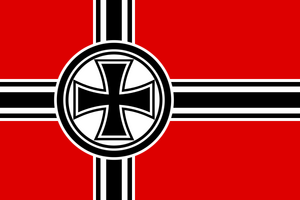 Germany to the west and an equally hostile
 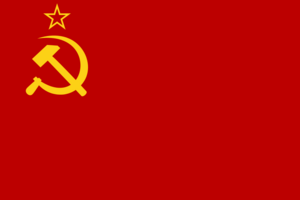 USSR to the east, with no defensible natural borders on either side.
National Spirits at Start
Poland starts with up to four national spirits that paint a picture of a regime internally divided between rival political factions, though two of them are only active with the "Poland: United and Ready" expansion.

The April Constitution
-15% political power gain. +15% conscription and economy law cost. +15% political advisor cost.

Looming Peasant's Strike
Warns of rural unrest risk if the government doesn't address peasant demands.

Low Sanation, Left Opposition
-5% stability. +0.02 daily support for unaligned. (With "Poland: United and Ready")

Low Sanation, Right Opposition
-10% war support. +0.05 daily support for unaligned. (With "Poland: United and Ready")
The Real Problem
You're not going to match Germany in army size or industry, so stop trying. The question that matters isn't whether you can win the war, but how long you can drag it out and what it costs the enemy for every week you're still standing. Time, not equipment, is what you're really short on: every focus you take too long to activate is one more day Germany uses to prepare the invasion better.
The Focus Tree Branches
Poland's tree is organized around several main branches:
 The Four Year Plan — industrial development: factories, research slots, railways, and infrastructure.
 Develop Polish Shipbuilding — the alternative to seizing Danzig by force; with 0 starting dockyards, either route starts from zero.
 Prepare for the Next War — military modernization, research bonuses for the army and air force.
 Complete the April Constitution — the historical branch, which forces a balance between the Sanation Left and Right with civil war risk if that balance breaks.
 The Międzymorze Concept ("Between the Seas") — the real alliance system Poland actually tried to build in real life with the Eastern European nations between the Baltic and Black Seas.
 Prepare for the Inevitable — continuation-of-war mechanics, including off-map factories and intelligence expansion, built for when the homeland falls.
This guide doesn't go into the detail of the more extreme political routes (restoring the democratic Sejm, the fascist route, a Habsburg monarchist restoration) — they're playthrough paths that will be covered in separate content later.
Plan West or Plan East
The military fork that really matters is real, not a game invention:  Plan Zachód ("Plan West"), focused on border defense against Germany, and
  Plan Wschód ("Plan East"), focused on defense against the USSR, were the two real contingency plans of the Polish High Command in the 1930s. In the game, prioritizing one or the other determines where your fortifications and army concentrate — and since the real threat almost always arrives first from the west, most games benefit from tilting the balance toward Plan West without fully neglecting the eastern flank.
Doctrine and Division Templates
Poland doesn't start with any doctrine unlocked out of the box, and with only 9 starting military factories there's no room to chase an expensive armor doctrine. Design your army with a survival mindset from day one: infantry divisions with support companies built to hold out for weeks, not to win battles — every division still standing is already a victory, not the draft of a bigger army you'll never have time to finish. That's why for the land doctrine tree we recommend  Superior Firepower: it doesn't need an armor industry you don't have, and its artillery and entrenchment do exactly what you need — hold out as long as possible, not break a front.
For the exact breakdown of combat widths and template composition, the combat width guide and the doctrines guide go into the numerical detail this guide only sketches out.
The 1939 Campaign
If you're going to follow the historical script, what really matters isn't the exact dates but what you need to have ready at each stage to drag out the resistance as long as possible. Here's what to do at each phase:
- German invasion — the Wehrmacht attacks from the west, north (East Prussia), and south (Slovakia) at once, so don't concentrate your whole defense on one stretch of border; split forces across all three fronts and keep some mobile reserve to react to whichever gap opens first.
- Wieluń and Westerplatte-style border garrisons — don't expect them to hold long: use them to buy hours, not to win the battle, and don't waste extra troops trying to hold isolated outposts that are already doomed.
- Battle of the Border — don't try to defend a continuous line along the whole border, it's too long; fall back to defensible terrain (rivers, high ground) instead of spreading divisions thin everywhere.
- Soviet invasion — don't leave the eastern flank completely undefended even if Plan West is your priority; a minimal garrison there keeps that front from collapsing without any resistance at all.
- Siege of Warsaw — fortify the capital heavily: holding out here for weeks is exactly this guide's goal, making the enemy pay for every extra day you stay standing.
- Last organized resistance — if the front collapses, pull whatever divisions you can out of encirclement instead of letting them get destroyed in place; every division saved counts toward the government-in-exile phase.
- Government in exile — have a plan ready in advance for handing off to a government in exile and a retreat route for surviving troops, so you can keep fighting on other Allied fronts instead of disappearing with the capitulation.
Common Mistakes
- Chasing offensive focuses before fortification and border defense — an attack army you won't have time to finish is worth nothing.
- Not seeking French and British guarantees or support in the diplomatic phase, even though historically they arrived too late and too weak.
This guide will expand with diplomatic routes to delay the invasion; in the meantime, the combat width guide helps you get more defense out of a small army.
Poland's Achievements
Seven achievements specific to Poland, from the most straightforward to the ones that require a whole game planned around them:

Bearer of Artillery
Gain Wojtek as commander.

Poland Can Into Space
Finish all Rocket Technologies as Poland.

No more Partitions
As Poland, be independent and ensure that both Germany and the USSR are either in your faction or don't exist.

Poland Peasant Revolution
As Poland, have the Peasant's Strike overthrow the government.

Crusader Kings III
As Poland, crown a King (or Queen) and capture Jerusalem.

Habsburgs. Habsburgs everywhere
As Poland, install a Habsburg monarch and be in a faction with another Habsburg monarch.

30 Minutes of Hel
As Poland in the 1939 "Blitzkrieg" scenario start, inflict over 1,800,000 casualties on Germany.