
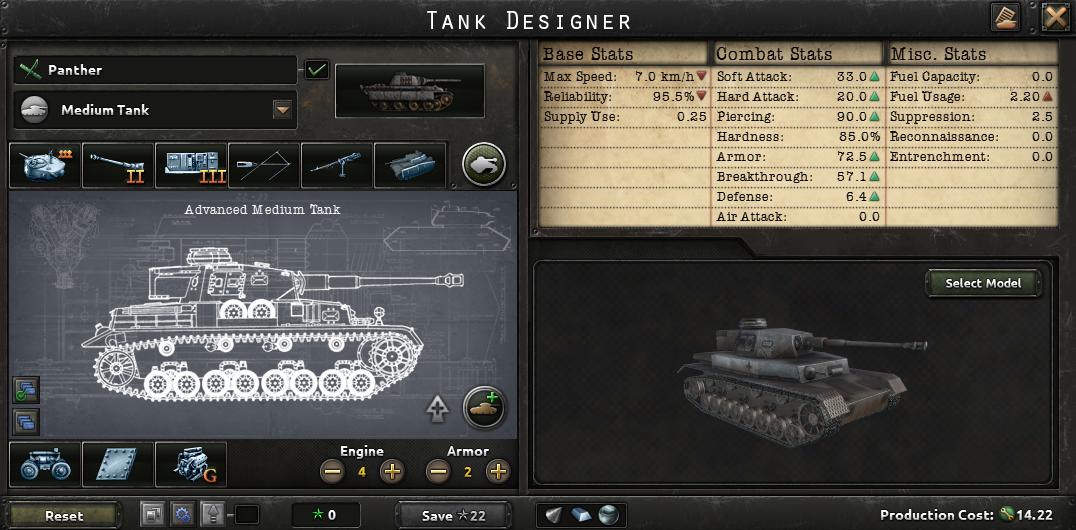
Before No Step Back (2021), every tank model was a sealed unit: you upgraded from "Light Tank I" to "Light Tank II" and that was it. The tank designer replaced that entirely with the same modular system already used by aircraft and ships: you pick a chassis, then add an engine, armor, turret, main gun, and auxiliary modules, and the game itself calculates the final stats and production cost. Without this expansion active, the game still uses the old fixed-model system — everything below only applies if you have it.
Chassis: the Starting Point
The chassis is the base everything else is built on, and the first real decision in the design: it sets base speed, how much armor it can carry, and — most importantly — the maximum turret size it can mount, which in turn limits which weapons it can use. There are four main families:
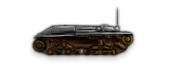 Light — the cheapest and fastest, with less armor and less long-term room to grow. It's also the base for amphibious tanks.
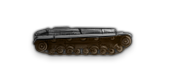 Medium — the classic balance of speed, armor, and cost; the most common base for a "general purpose" tank.
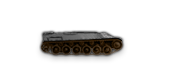 Heavy — much more armor and carrying capacity at the cost of speed and a noticeably higher production cost.
 Super-Heavy and Modern — late-research chassis meant for long games where industry is no longer the bottleneck.
Each family has several generations unlocked through research (Basic Medium Tank Chassis → Improved → Advanced, for instance), and each generation improves base speed, armor, and reliability. Move up a generation before redesigning the rest of the tank: switching chassis families mid-war forces you to redo all the design work, since the parts aren't interchangeable across families.
 Engine and Suspension
Every design needs an engine and a suspension to be valid, and neither is optional. The engine sets top speed and fuel consumption: the gasoline engine is the default, diesel cuts fuel use, and the gas turbine (late research) trades reliability for more speed. Beyond the type, the engine has research-unlocked upgrade levels (0 to 20, in steps of 5) that add speed while subtracting reliability — the harder you push it, the less reliable the whole design gets.
The suspension carries the vehicle's weight. For tracked chassis there are several options (Christie Suspension prioritizes speed, Torsion Bar prioritizes reliability), and only light chassis can additionally choose a non-tracked suspension — half-track or wheeled — which cuts production cost a lot but hurts hardness and reliability, leaving the design more exposed on rough terrain.
 Armor: Types and Upgrade Levels
The armor type decides how much protection each unit of weight provides: riveted is what you start with, cast improves protection at a cost, and welded (later research) gives even more armor and breakthrough without hitting cost as hard as cast does. Just like the engine, armor has its own research-unlocked upgrade levels that add armor and breakthrough per level while subtracting some speed and reliability — the same "the harder you push it, the heavier and less reliable it gets" logic that governs the whole designer.
 Turret and Main Gun
The turret is the main source of breakthrough, and its size — set by the chassis — limits which weapons you can fit on it: a small turret only takes small weapons, and so on. The alternative is a fixed superstructure: you give up some breakthrough and the ability to mount an anti-air gun (it can't traverse or elevate enough to track planes), but in exchange you can fit a bigger gun than that chassis family would otherwise allow with a normal turret, plus extra reliability.
The main gun doesn't just provide most of the vehicle's damage: it also decides which role the design can fill in a division template (see below). Mounting an anti-air gun, for instance, automatically turns the design into a self-propelled anti-air unit, not a tank.
 Auxiliary Modules
Beyond the required parts, every chassis has a number of free slots for auxiliary modules: a smaller secondary turret, radios (improve the division's command and initiative), and special modules depending on which technologies you've researched (extra fuel tanks, vision upgrades, deep wading snorkels, and so on). There's no single correct combination — it depends on how many slots you have left after covering engine, armor, and gun, and on what the specific role you're giving the design actually needs.
The Design's Roles
The same chassis can become very different vehicles depending on the weapon and options you pick when creating the design:
 Tank — the default role, meant to lead the breakthrough in armored battalions.
 Tank destroyer — trades most of its breakthrough for a big jump in hard attack and armor penetration against other vehicles; it supports from behind the line, it doesn't lead it.
 Self-propelled artillery — prioritizes soft attack at range, with less armor and breakthrough than an equivalent tank.
 Self-propelled anti-air — protects the division from enemy air attack at the cost of almost everything else.
 Flame tank — a very specialized role for assaulting fortifications and cities, with heavy penalties across nearly every other stat.
Choosing a role other than "tank" drastically cuts the resulting battalion's breakthrough — it's not a cosmetic change, it changes what the unit is actually for inside the division template.
How to Read the Final Stats
The panel on the right groups the stats into three blocks. Base stats covers max speed, reliability, and supply use. Combat stats covers the ones that actually decide a battle: soft attack (against infantry), hard attack (against other vehicles), piercing, hardness (how much of the enemy's attack ignores your target armor), your own armor, breakthrough, defense, and air attack. Misc stats covers fuel capacity, fuel consumption, suppression (against resistance in occupied territory), reconnaissance, and entrenchment. Production cost, at the bottom, climbs with every upgrade you add — a design that's "perfect" on paper can be unworkable if your industry can't produce it in the numbers you need.
Common Mistakes
- Chasing every upgrade level at once — each engine or armor level adds stats but also subtracts reliability and raises cost; an over-upgraded design can end up performing worse in practice than a more restrained one.
- Picking a fixed superstructure without needing it — you give up breakthrough and the anti-air option in exchange for a bigger gun and reliability; it's only worth it if you genuinely need that jump in caliber.
- Redesigning only the gun and forgetting the chassis still caps turret size — if you want a much bigger gun, sometimes the real fix is moving up a chassis family, not just upgrading the gun.
- Not checking production cost before replacing the model in production — a design that's better on paper but sends the cost soaring can slow down your replacement rate instead of speeding it up.