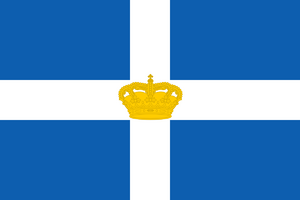
Greece starts the war on the defensive: first 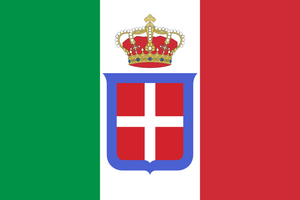 Italy calls, then
 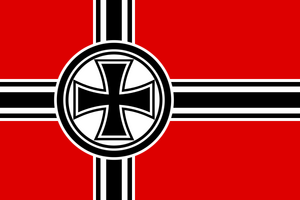 Germany. But before thinking about the front line, you need to understand how unstable the country is internally — the
  Political Instability spirit sums up a decade with twenty-three changes of government, thirteen coups, and a dictatorship. This guide bets on the same thing that saved the real Greece in 1940 — mountain terrain and morale — to hold, or outright improve on, that resistance.
Historical Context
After the trauma of the Greco-Turkish War, Greece spent years in a spiral of instability almost unmatched in Europe — twenty-three changes of government and thirteen coups between 1924 and 1935 — until King George II was restored to the throne in 1935. The game starts in 1936 with Konstantinos Demertzis as prime minister, in a country that would soon see General Ioannis Metaxas seize power with the king's backing and establish an authoritarian regime.
National Spirits at Start
Greece starts with six national spirits that portray a politically unstable kingdom, economically dependent on the outside world, and still predominantly agrarian.

George II
−5% stability, +0.01 daily non-alignment support — an unpopular king, restored from exile thanks to a rigged plebiscite.

Debt to the I.F.C.
+30% to consumer goods factory factor, −10% stability — the International Financial Commission, controlled by the United Kingdom, France, and Italy, demands full repayment of Greek debt.

Foreign Monopolies
+40% to consumer goods factory factor, +75% economy and trade law cost — entire sectors of Greek industry in the hands of foreign companies.

Schachtplan
−25% to consumer goods factory factor, +30% resources to market, +25% economy and trade law cost — the German trade deal keeping the Greek economy afloat in exchange for raw materials.
Political Instability
−15% political power gain, with monarchists loyal, republicans hostile, and communists hostile — the direct legacy of a decade of coups and fallen governments.

Agrarian Society
−45% recruitable population factor, −30% factory output — an economy centered on agriculture and products like tobacco, dependent on foreign heavy industry.
Twenty-Three Governments in Eleven Years
The Political Instability spirit isn't just another modifier: it's the mechanical summary of a real decade of political chaos. Monarchists, republicans, and communists all start with fixed positions toward the government, and that pre-existing fracture is exactly what the Royal Family branch of the focus tree exists to resolve once and for all.
The Focus Tree Branches
Greece's tree is organized around four main blocks:
 Bring Home the Exiled Republicans — allows forming a democratic, communist, or even a fascist Byzantine government.
 The King's Government — the central historical branch: decides whether George II becomes an absolute monarch or Metaxas takes control of the country.
 Devaluating the Drachma — manages foreign debt, boosts industry, and forces a choice between industrializing the country or keeping its agrarian character.
 Hellenic Armed Forces — expands military technology and gives mountain training bonuses to infantry.
This guide doesn't go into the detail of the branch that brings back the exiled republicans — the democratic, communist, or fascist Byzantine Empire routes — they're playthrough paths that will be covered in separate content later.
George II or Metaxas
The tree's central decision pits  The Right to Rule — George II declares himself absolute monarch, doing away with the need for a dictator to act on his behalf — against
  Metaxism, which follows the real script of August 1936: the king keeps the head-of-state role but hands effective power to General Ioannis Metaxas.
For a first playthrough, the Metaxas route is the more recommended one: it follows the historical path and offers more direct tools to tackle internal instability by cracking down on republican opposition. The king-as-absolute-monarch route gives more room to negotiate British support and foreign capital, but requires directly managing the civil war risk that comes with concentrating so much power in the crown.
The Terrain Is Your Army
With Greece's industry, you're not going to match Italy, let alone Germany, on equipment. It doesn't matter: the mountainous north drastically reduces the combat width available to the attacker, so a well-entrenched defender punches far above its real size. Concentrate divisions in the mountain passes instead of stretching them along a continuous line — a narrow, fortified front holds what a wide, weak one can only dream of.
 British support through diplomacy, and mountain infantry in your division designs — don't waste time trying to compete with Italian armor. For the land doctrine tree, with only 2 starting military factories,
  Superior Firepower gets far more out of mountainous terrain and a defensive posture than any attempt at an armor doctrine.
War Campaigns
If you're going to follow the historical script, what really matters isn't the exact dates but what you need to have ready at each stage to match or improve on that resistance. Here's what to do at each stage:
- Italian invasion — have fortifications and mountain infantry already deployed on the Albanian border before the attack arrives, not after; Italy expects a quick victory, and a front well-prepared from day one already breaks that plan.
- Greek counteroffensive — once the Italian attack loses steam, don't just sit on the defensive: push into Albania to gain ground and initiative, just like the real army did, instead of settling for having held the line.
- German invasion — the real threat isn't Italy, it's what comes after: keep a strategic reserve for the border with
 Bulgaria and don't spend your whole army beating the Italians, or you'll have nothing left when the Wehrmacht arrives.
 - Fall of the mainland — decide in advance whether mainland defense is sustainable or whether it's better to preserve troops for a fallback to Crete; improvising this once the front is already broken gets expensive.
- Crete-style defense — if you fall back there, fortify the island heavily and prioritize anti-air defense; historically it became the target of the largest airborne operation of the war to that point.
- Occupation and resistance — if the mainland ends up falling, don't treat it as the end: sustained partisan resistance in the mountains keeps draining the occupier's resources long after the formal capitulation.
To see the same conflict from the other side, the Italy guide tells it from Rome.
Common Mistakes
- Spreading the defense across too wide a front instead of concentrating it where the mountains work in your favor.
- Trying to hold alone against two Axis powers without lifting a finger to secure outside support in time.
- Ignoring Political Instability thinking it's a minor problem — with monarchists, republicans, and communists already opposed, one badly-timed political decision can trigger an internal crisis in the middle of the war.
Greece's Achievements
Seven achievements, with a strong Byzantine-Ottoman flavor and one shared with  Turkey:

Bad Romeance
Restore Byzantium and have Italy, Romania, and Russia as subjects.

Freedom or Death
As Greece, liberate Albania while being at war with Italy.

Hellenic Civility
Win the Greek Civil War before 1937.

I Captured the Bosporus...
As Greece or Bulgaria, own both sides of the Bosporus.

Istanbul is Constantinople. Again.
As Greece, capture Istanbul and rename it Constantinople.

I Swear I'm Not a Byzantophile
As Greece, form the Byzantine Empire.

This is Madness!
As Greece, fulfill the Megali Idea and then form Greater Greece.