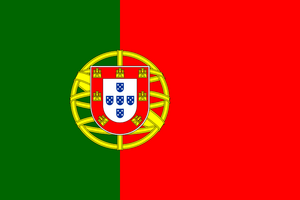

Portugal starts neutral, with a colonial empire scattered across half the world and an Atlantic position — the Azores, above all — that both sides want. But the  Unstable Republic spirit sums up exactly why the country enters this game under Salazar: nine presidents, forty-four cabinet reorganizations, and twenty-one revolutions in barely sixteen years of republic.
Historical background
The Portuguese monarchy fell in 1910, giving way to a First Republic that turned out to be one of the most unstable in Europe — twenty-one revolutions between 1910 and 1926 — until a military coup ended it and the process culminated in 1933 with the Estado Novo under António de Oliveira Salazar. The game begins in 1936 with Salazar already consolidated in power, governing a country still digesting decades of instability and an army demoralized by years of coups and counter-coups.
Starting national spirits
Portugal starts with only two national spirits — the shortest list in this whole guide — but together they sum up precisely the direct legacy of sixteen years of republican instability.

Unreliable Army
−10% division organization, −25% recruitable population factor, −5% war support, −5% division attack — officers more worried about politics than discipline, after years of coups and counter-coups.
Unstable Republic
−0.50 daily political power gain, −0.50% weekly stability, −20% construction speed — the direct legacy of nine presidents, forty-four government reorganizations, and twenty-one revolutions between 1910 and 1926.
Twenty-one revolutions in sixteen years
The Unstable Republic spirit isn't just another penalty: it's the direct mechanical explanation for why so much of Portugal's focus tree revolves around internal stability before any external ambition. With that real figure of twenty-one revolutions still fresh in the country's memory, it's no surprise that a large part of the tree is dedicated to consolidating the regime — whatever form it ends up taking — before looking outward.
The focus tree's branches
Portugal's tree is organized around several main blocks:
 Colonial Assimilation Policy — manages Portugal's colonies and their industry.
 Continue the Public Works — industrial expansion, extra research slots, and land and air research bonuses.
 Second Navy Reequipment — naval industry expansion and Navy research bonuses.
 Army Reorganization — military infrastructure and land doctrines.
 Popular Front and
  Estado Novo — the central political branch: decides the ideology, the ruling party, and Portugal's stance on the Spanish Civil War.
This guide doesn't go into the specific ideological routes that open up after that decision — supporting the Spanish Republic, the Nationalists, or a monarchist restoration through A Royal Wedding — those are branching paths that deserve their own dedicated coverage down the line.
Estado Novo or Popular Front
The central political decision pits Estado Novo — the historical route: continuing and consolidating the authoritarian regime Salazar already has running at the start — against Popular Front, which opens an alternative democratic path by breaking from the direction the country is already heading.
For a first playthrough, Estado Novo is the simpler route: it follows the path the game has already set and offers the most direct tools for fixing the instability inherited from the Republic. Popular Front requires actively reversing that direction and managing a far more delicate political transition, given the state of the army and the fragility of the starting institutions.
Neutral, but with an empire
Your home industry is modest, and the colonial empire is scattered across Africa and Asia without much cohesion. The starting priority is consolidating and modernizing rather than dreaming of any military adventure. What you do have plenty of is strategic value: the Azores, right in the middle of the Atlantic, interest both London and Berlin without forcing you to pick either.
- Industrial and military modernization while the window of neutrality lasts.
- Consolidating and developing the colonial empire as an extra source of resources and manpower.
- Using the Azores' position as diplomatic leverage against both
 the United Kingdom and
  Germany.
 - Deciding early whether you're aiming for full neutrality or some degree of cooperation with the Allies.
Where value gets lost
The typical mistake is treating the colonies as scenery instead of the resource base they actually are. The second is not sitting down to negotiate with that Atlantic position in hand, letting go of leverage that doesn't cost you a single division. The third is ignoring Unreliable Army and jumping into any military adventure before fixing it.
Portugal in the real war
If you're going to follow the historical script of calculated neutrality, here's the real sequence:
- Selling wolfram to both sides (through much of the war) — the Portuguese mineral, crucial for weapons manufacturing, is sold to both the Allies and the Axis.
- Azores Agreement (October 1943) — Portugal grants Azores bases to the United Kingdom under the 1386 Anglo-Portuguese Alliance, the oldest surviving alliance in the world.
- American use of the Azores (1944) — Portugal secretly allows
 the United States to use those bases as well.
 - End of wolfram sales to Germany (June 1944) — under mounting Allied pressure, Portugal stops selling the mineral to the Axis.
- Lisbon as an escape hatch (throughout the war) — the Portuguese capital becomes one of the main transit points for refugees fleeing occupied Europe.
If you want to squeeze more value out of what your colonies produce, the resource trading guide is the natural next read.
Portugal's achievements
Just two achievements, the shortest list in this whole guide:

BFFs
As Portugal, join the same faction as Great Britain.

Go Ahead, Macau My Day
As Portugal, create a collaboration government in Macau and have it own all Chinese states.